Integra End of Support 2026: The Ready-Mix Dispatch Software Replacement Guide

Director of Marketing
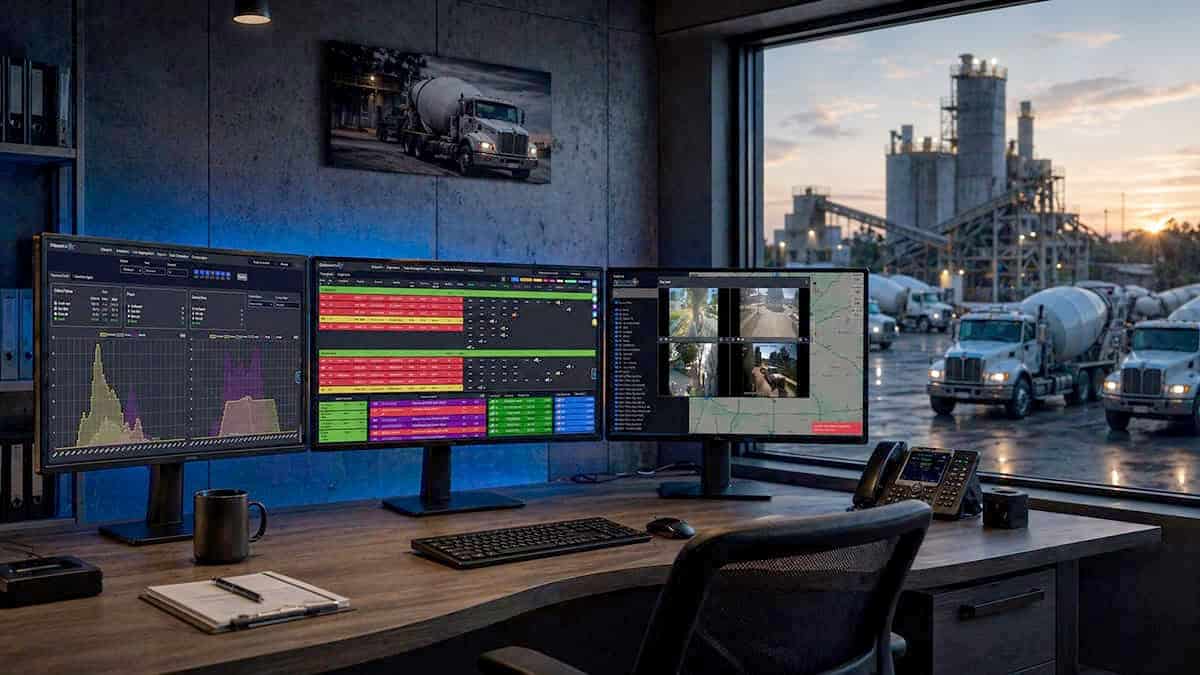
Command Alkon has officially confirmed that Integra — its long-running dispatch platform for ready-mix concrete producers — will reach end of support on December 31, 2026. That means no more updates, no bug fixes, and no technical support after that date. If you are running Integra today, the clock is already running.
The announcement is not a rumor or a roadmap signal. It is a published deadline, documented on Command Alkon's own content hub under the title "Ready Mix Dispatch: Prepare for Integra End of Support." The page is explicit: producers have two paths — migrate to Command Cloud or find a different solution.
This guide will not tell you what to do. But it will give you the full picture — because if you are going to evaluate alternatives to Integra, you deserve to understand what the landscape actually looks like, what questions to ask every vendor, and what a purpose-built modern platform can do that a legacy system never will.
This guide is for you if:
- You are currently running Command Alkon Integra
- You have heard that Integra support ends December 31, 2026
- You are starting to evaluate your options but are not sure where to begin
- You want an honest assessment — not a sales pitch disguised as a comparison guide
The Clock Is Running.
Command Alkon has confirmed Integra support ends December 31, 2026. If you are still deciding, you have not missed your window. Integra keeps running after that date. What ends is support. The real risk now is letting a deadline rush you into a decision you will live with for years.
After this date, Integra will receive no bug fixes, security patches, or technical support from Command Alkon.
See Your Replacement Options →What Happens When Command Alkon Integra Support Ends in 2026
Confirmed: Integra End of Support — December 31, 2026. After this date, Command Alkon will no longer provide bug fixes or patches, technical support for Integra issues, security updates, or compatibility updates for new operating systems and hardware.
Integra will not stop working on January 1, 2027 — but any failure, security exposure, or compatibility issue that occurs after that date will have no official resolution path.
Source: Command Alkon — "Ready Mix Dispatch: Prepare for Integra End of Support"
Command Alkon grew for decades primarily through acquisition — building a portfolio that includes Integra, COMMANDseries, and many other products. The challenge with that growth model is that acquired systems carry inconsistent underlying data structures and workflows that are difficult to unify.
In 2019, Command Alkon made a deliberate strategic pivot — re-imagining their offering as a unified cloud SaaS platform. That pivot has one clear implication for customers still running legacy products: the company's investment, engineering resources, and product development are moving toward the cloud. Legacy products get maintained through their end-of-support date. They do not get meaningfully improved.
When Command Alkon launched their cloud-native Dispatch product in early 2023, they positioned Command Cloud as the next step for customers on legacy platforms. By January 2024, Command Alkon reported over 60 customers live on the new cloud platform. The legacy migration is already underway — the question is whether you get ahead of it or react to it.
The Real Risk: Running legacy dispatch software in 2026 is not that it breaks tomorrow — it is that it falls further behind every year while competitors who made the switch are operating with tools you do not have. And after December 31, 2026, when something does break, there is no one to call.
The Integra Migration Mistake Most Ready-Mix Producers Make
When a vendor tells you it is time to migrate, most producers make one of two mistakes.
The first mistake is assuming that migrating means moving to whatever the vendor recommends. If you have been an Integra customer and Command Alkon is pushing you toward Command Cloud, you may be evaluating their platform as if it is your only option. It is not. A platform migration is the right time to evaluate the entire market — not just the path of least resistance. Command Cloud is one option for Integra users, but it is a separate product on different architecture, sold as a separate subscription. Producers are not automatically moved to it; they must evaluate and purchase it independently.
The second mistake is letting the deadline make the decision. With December 31 this close, the easiest move is to sign whatever is in front of you. But Integra does not shut off on January 1, so you still have time to see a platform run your own operation before you commit. Do not stall, because every week on unsupported software carries real risk. Just do not let the calendar pick your next system for you.
The right time to evaluate is now — when you have leverage, when you are not in crisis, and when you can take the time to find the right fit rather than the fastest exit.
How to Evaluate a Ready-Mix Dispatch Software Replacement
Here is the evaluation framework we recommend — and we mean this regardless of whether Dispatch360 ends up being the right fit for your operation. When evaluating a concrete dispatch software replacement for Integra, look for five things:
- Purpose-built for construction materials — not adapted from generic fleet software
- Cloud-native architecture — not server-based or legacy software hosted in the cloud
- Transparent, predictable pricing — not modules priced separately
- One unified platform — dispatch, GPS, eTicketing, and reporting in a single system
- US-based support with real industry experience
Built for Construction Materials — Not Adapted from Generic Fleet Software
The worst outcome of a platform migration is landing on a generic trucking or fleet management tool that has been lightly customized for ready-mix. The concrete industry has specific requirements — batching integration, drum sensor data, delivery cycle statuses, eTicketing, and customer portals for job site visibility — that generic platforms handle poorly. Ask any vendor: was this built from the ground up for construction materials, or adapted from something else?
Cloud-Native Architecture — Not Legacy Software Hosted in the Cloud
There is an important distinction between a cloud-native platform and a legacy system that has been moved to someone else's server. A cloud-native platform was designed from day one to run in the cloud — with real-time updates, multi-device access, automatic software updates, and no local server to maintain. Ask every vendor: was this platform built cloud-native, or was it migrated to the cloud from an on-premise system?
Transparent, Predictable Pricing — No Module Fees
One of the most common complaints from producers running enterprise concrete dispatch platforms is the pricing model. Features that should be core to the product are sold as add-on modules. Annual price increases feel like leverage rather than value. Ask for a complete pricing breakdown upfront — not a quote that gets revised after you have already invested time in the evaluation.
One Platform for Every Truck Type You Run
If your operation runs ready-mix trucks alongside aggregate dump trucks, volumetric mixers, or a block and precast fleet, you need a platform that handles all of them in one system. Ask every vendor: can your dispatchers see every vehicle in every part of our operation on one dispatch dashboard?
US-Based Support from the Team That Built the Platform
When your dispatch system goes down at 4:30 AM on a Friday before a major pour, you need to reach a person who knows the product. Not a tier-one support team reading from a script. Ask every vendor who answers the phone, where they are located, and how long they have been working with the product. Meet the Dispatch360 team →
Integra vs. Dispatch360 at a Glance
For producers in active evaluation mode, this side-by-side breakdown covers the dimensions that matter most in a dispatch platform decision.
| Dimension | Command Alkon Integra | Dispatch360 |
|---|---|---|
| Architecture | On-premise / legacy server | Cloud-native |
| Support status | Ends December 31, 2026 | Active development |
| Deployment | On-site installation required | Browser-based, no installation |
| Pricing model | Module-based licensing | Unified platform, transparent |
| GPS fleet tracking | Add-on / third-party integration | Built-in, near real-time refresh |
| eTicketing & ePOD | Add-on module | Included |
| Customer portal | Not included | Included |
| Video surveillance | Not included | Built-in (Vision & Complete packages) |
| Support team | Global enterprise org | US-based, industry-specialized |
| Migration risk | EOL deadline approaching | Managed migration process |
Ready to see what a purpose-built platform looks like? We will confirm batching system compatibility and walk you through every feature relevant to your operation — before you commit to anything. Request a Demo →
Why Ready-Mix Producers Are Choosing Dispatch360 Over Integra
Dispatch360 was designed from the ground up for construction materials — not assembled from acquired systems. It started with ready-mix concrete, the most operationally complex construction materials operation that exists, and expanding outward to aggregate, volumetric, asphalt and paving, and block and precast.
That matters because every feature was designed to work with every other feature from day one. No patchwork of acquired systems underneath the interface. No legacy data structures creating inconsistencies between modules. One platform, one data model, one team that built all of it.
Near Real-Time GPS Fleet Tracking
GPS tracking with a near real-time refresh — so the dispatch dashboard reflects where trucks actually are, not where they were half a minute ago. The difference between a dispatcher who is managing a fleet and one who is guessing.
Batching Integration That Pushes Tickets to the Plant
When a truck is ticketed in Dispatch360, that ticket pushes automatically to your compatible batching system through API integration or the industry-standard ULINK protocol — covering Erie Strayer, CommandBatch, Jonel, BatchTron, and others. See batching system integration details → The batcher knows what to load before the driver arrives. No phone call. No paper ticket handoff. No duplicate entry.
eTicketing and ePOD Built for Compliance
eTicketing and ePOD in Dispatch360 are compliance and legal documents — capturing mix design, water additions, drum rotation data, delivery timestamps, and customer signatures in a tamper-resistant digital record. These are the documents required by DOT and increasingly mandated by law on federally funded projects. No paper. No disputed deliveries. No missing documentation three weeks later when a customer questions a load.
Customer Portal That Eliminates the Where-Is-My-Truck Call
Contractors and GCs can see live delivery tracking, access digital tickets, and submit order requests directly through the customer portal — without calling your dispatch team. A well-built customer portal removes the reason for the call in the first place. Contractors and GCs stop calling to ask where their truck is — because they can already see it. Dispatchers stop fielding status updates — because the job site has a live feed. The calls that slow your operation down simply stop happening.
One Dispatch Dashboard for Every Truck Type You Run
Ready-mix drums, volumetric mixers, aggregate dump trucks, flatbed block delivery trucks — all visible from the same dispatch dashboard. If your operation runs more than one type of vehicle, you should never have to switch between systems to see your full fleet.
Fleet Push-to-Talk — Private LTE Network
Not a subscription to a consumer app. A private LTE network with set-top desk radios at the dispatch desk, the scale house, and the batch house, and CB-style cab-mounted radios in the trucks. Carrier-agnostic and always on. Learn more about fleet push-to-talk →
Live Vehicle Video Surveillance — Built In, Not Bolted On
Live dashcam feeds and 360-degree fleet visibility are built into Dispatch360 — not a separate vendor, not a separate subscription, not a separate screen. Live vehicle video, remote DVR playback, and configurable recording triggers are all part of the Vision and Complete packages. If something happens on a delivery, the footage is already in the same system as the ticket.
Reporting and Demand Forecasting Built for Construction Materials
Demand forecasting, driver performance metrics, delivery cycle timing, load counts by plant and by customer — all in one reporting suite. The data that lives in your dispatch system should be working for you, not sitting in a database you cannot query without calling support.
Transparent Pricing — No Module Fees, No Surprises
No modules priced separately to maximize the invoice. No support tiers that charge extra for what should be standard. See everything that's included → A configuration built around your fleet size and your operation — and a pricing conversation that happens upfront, not after you have already committed.
What Migrating from Integra to Dispatch360 Actually Looks Like
The most common concern we hear from producers evaluating a platform switch is the migration itself. Years of customer data, mix designs, order history, driver records, delivery tickets — the idea of moving all of that is daunting.
Here is the honest picture: a Dispatch360 deployment is not a six-month enterprise IT project. Most producers complete the transition in 4 to 12 weeks. The platform is configured around your specific fleet, batching system, and workflows. Drivers typically learn the tablet in a day. Dispatchers are generally comfortable on the dispatch dashboard within a week.
The complexity that made the old system feel indispensable is often a reflection of how much manual workaround had been built into the workflow — not how complex the operation itself actually is.
We confirm batching system compatibility before you commit to anything. If you are running one of the major batching platforms — Erie Strayer, CommandBatch, Jonel, BatchTron — the integration is already established. If you are running something less common, we tell you that upfront. No surprises after you have signed.
Command Alkon set the deadline. You set the pace. Here is how producers are moving off Integra in three steps.
Try it
With The Dispatch360 Experience, we build your account with your real ticket format, your logo, and your layout, plus sample trucks, drivers, and customers. Run the full dispatch workflow and see your own ticket come out the other end. No hardware, no credit card, no obligation.
Pilot it
Put a few of your own trucks on Dispatch360 while Integra keeps running the rest of your fleet. Real loads, real tickets, side by side. Pilot fleets do not require a full contract, and our team will walk you through the options.
Switch it
When your team is ready, we move your whole fleet over. Full data migration and onboarding begin, and we ship the hardware. Most producers complete the transition in 4 to 12 weeks, and our team is with you every step of the way.
A note on timing: If your pilot runs past December 31, the rest of your fleet will be on Integra without support during that stretch. Decide how much of that risk you are comfortable with and plan your switch date accordingly.
Integra Support Ends December 31, 2026. What's Your Plan?
Command Alkon has officially confirmed that Integra reaches end of support on December 31, 2026. That deadline is real, but it is a deadline for support, not for your decision.
You can still evaluate properly. See your own tickets in Dispatch360 before you sign. Pilot with a few trucks while Integra runs the rest. Switch your full fleet when your team is ready.
If you are running Integra or any legacy dispatch platform and want to see what that looks like for your operation, we would like to show you.
Frequently Asked Questions
When does Command Alkon Integra support end?
Command Alkon has officially confirmed that support for Integra ends on December 31, 2026. After that date, Integra will no longer receive updates, security patches, bug fixes, or technical support from Command Alkon. Producers still running Integra after the end-of-support date will have no official resolution path for failures or security vulnerabilities. Source: Command Alkon — "Ready Mix Dispatch: Prepare for Integra End of Support"
Is it too late to switch from Integra?
No. Integra does not stop working on January 1, 2027. What ends is bug fixes, security patches, and technical support. You still have time to evaluate properly, but every month on unsupported software carries real risk. With The Dispatch360 Experience, you can see your own ticket format running in Dispatch360 before you sign anything, then pilot with a few trucks before moving your full fleet.
Can I keep running Integra while I test Dispatch360?
Yes. The Dispatch360 Experience runs entirely in software and does not touch your Integra setup. When you are ready, you can pilot Dispatch360 with part of your fleet while Integra runs the rest, then switch your full fleet when your team is comfortable.
What is Command Alkon Integra?
Command Alkon Integra is a quote-to-cash dispatch software built specifically for ready-mix concrete producers. It covers order entry, scheduling, ticketing, truck tracking, driver communications, invoicing, and accounts receivable in a single on-premise platform. Integra has been a dominant dispatch platform for mid-to-large ready-mix operations for many years, but Command Alkon has confirmed it will no longer be supported after December 31, 2026.
Is Command Cloud the same as Integra?
No. Command Cloud is Command Alkon's new cloud-native dispatch platform, launched in early 2023. It is a separate product from Integra — built on different architecture and sold as a separate subscription. Producers migrating from Integra are not automatically moved to Command Cloud; they must evaluate and purchase it separately. Command Cloud is one option for Integra users, but not the only one.
What does Integra end of support mean after December 31, 2026?
After December 31, 2026, Command Alkon will no longer provide bug fixes or patches, technical support for Integra issues, security updates, or compatibility updates for new operating systems and hardware. Integra will not stop working on January 1, 2027 — but any failure, security exposure, or compatibility issue that occurs after that date will have no official resolution path. Producers running unsupported software also face increasing risk of incompatibility with updated operating systems and third-party integrations over time.
What is the best alternative to Integra dispatch software for ready-mix concrete producers?
The best Integra alternative depends on fleet size, plant count, and whether the producer needs a dispatch-only solution or a full operations platform. Key evaluation criteria include whether the platform is cloud-native, built specifically for construction materials (not adapted from generic fleet software), whether pricing is transparent and predictable, and whether support is US-based with industry experience. Dispatch360 is purpose-built for ready-mix, aggregate, volumetric, asphalt, and block and precast — covering dispatch, GPS fleet tracking, eTicketing, customer portal, and video surveillance in a single cloud platform.
How long does it take to migrate from Integra to a new dispatch platform?
Most ready-mix producers complete a full Integra replacement in 4 to 12 weeks. The longest phase is typically data migration and dispatcher training — not the technical setup. With Integra support ending December 31, 2026, producers starting now can realistically be live in early 2027, using a small pilot fleet to bridge the gap while Integra runs the rest.
What should I look for when evaluating ready-mix dispatch software alternatives?
Ask every vendor five questions: Was this built specifically for construction materials, or adapted from generic fleet software? Is this truly cloud-native, or legacy software moved to a cloud server? Can I see a complete pricing breakdown upfront with no module fees? Can dispatchers see every truck type we run on one dispatch dashboard? And who answers the phone at 4:30 AM when something goes wrong?
Does Dispatch360 integrate with my existing batching system?
Dispatch360 integrates with compatible batching systems through direct API integration or the industry-standard ULINK protocol. Compatible systems include Erie Strayer, CommandBatch, Jonel, and BatchTron. When a truck is ticketed in Dispatch360, the ticket pushes automatically to the batching system — the batcher knows what to load before the driver arrives with no phone call, paper handoff, or duplicate entry required. Batching system compatibility is confirmed before you commit to a deployment. See batching integration details →
Is Integra by Command Alkon being discontinued?
Yes. Command Alkon has publicly confirmed that Integra reaches end of support on December 31, 2026. The company made a deliberate strategic pivot to cloud SaaS beginning in 2019 and launched Command Cloud, their cloud-native dispatch platform, in early 2023. Engineering investment and new feature development are now focused on Command Cloud. Integra continues to receive maintenance and security patches through the end-of-support date, but meaningful product improvements are no longer part of the roadmap. Sources: Command Alkon content hub | Command Alkon GlobeNewswire, January 2024
Director of Marketing
James Harris leads marketing for Dispatch360 and has spent years embedded in the ready-mix concrete, aggregate, and construction materials industry — learning the operational realities that dispatchers, plant managers, and fleet operators deal with every day. He authors The Dispatch Journal, where he covers dispatch te…
Ready to See Dispatch360 in Action?
The best way to understand what Dispatch360 looks like for your operation is to see the actual platform running.