Ready-Mix Dispatch Has Evolved. Have You?

Director of Marketing
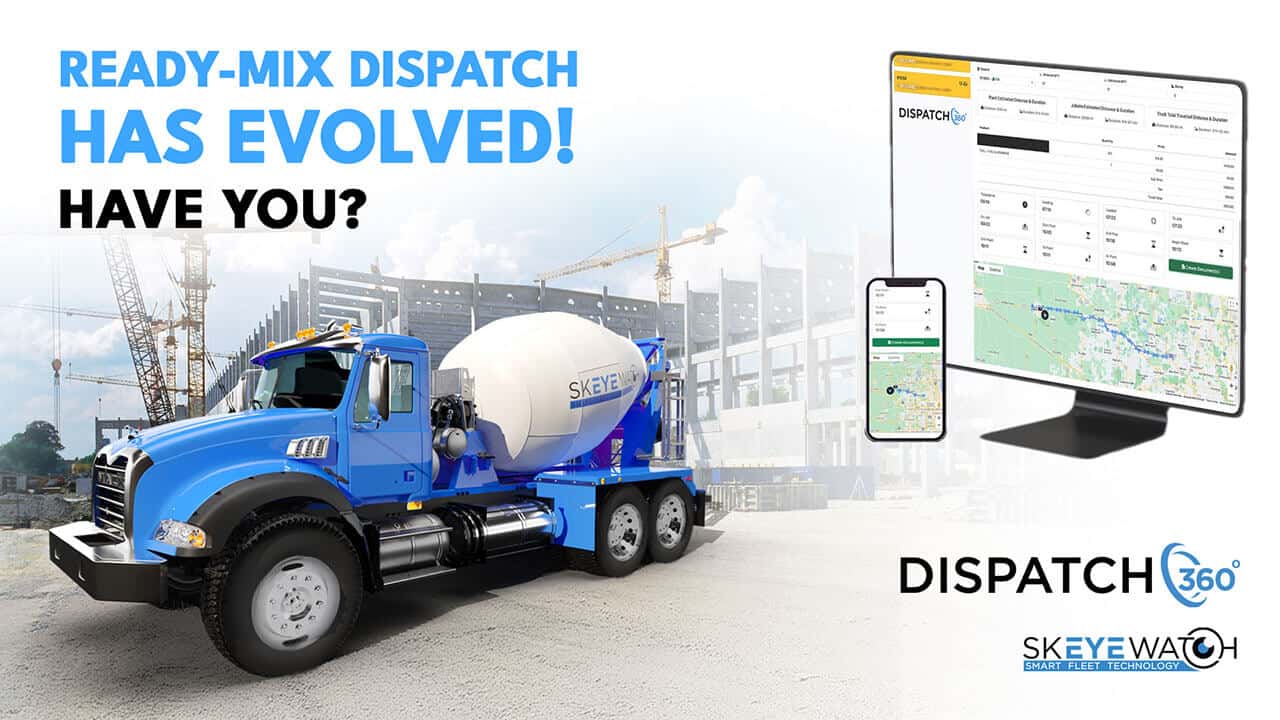
The concrete dispatch industry has changed considerably in the last five years. The question worth asking at the start of 2025 is whether your operation has changed with it -- or whether the system you ran five years ago is still running your operation today.
The Problem With Normalized Inefficiency
There is a specific kind of operational problem that is easy to miss -- not because it is hidden, but because it is familiar. When a system has always had a 90-second GPS delay, the dispatcher adjusts. When paper tickets have always required end-of-day reconciliation, the billing team builds their schedule around it. When customers have always called to ask about delivery status, the dispatcher develops a rhythm for handling those calls. None of those workarounds feel like problems after a while. They feel like the job.
The concrete dispatch industry has changed considerably since those workarounds became habits. Cloud-native platforms, real-time GPS with second-by-second updates, digital ticketing that captures water-add data automatically, and customer portals that eliminate status calls entirely -- none of these were standard features five years ago. Many of them are standard in Dispatch360 today.
The gap between what the industry now makes possible and what most operations are still running is wider than most producers realize -- because you do not notice what you are missing until you see it working.
What Has Actually Changed in Ready-Mix Dispatch
The advances in ready-mix dispatch technology over the past several years are not incremental. They represent a fundamental shift in what dispatchers can see, what drivers can do without interrupting their workflow, and what customers can access without calling your team.
Real-Time GPS Has a New Meaning
GPS tracking that refreshes every 90 seconds was the standard for years. The practical implication -- a dispatcher making sequencing decisions based on data that is already a minute and a half old -- was accepted because there was no alternative. Dispatch360 updates truck locations in seconds. For a dispatcher managing load cycles across five active pours, that difference is not marginal.
Paper Ticketing Is an Operational Liability
A paper delivery ticket is not just an administrative inconvenience. It is a billing delay, a potential dispute, and a quality control gap every time it leaves the cab. Digital eTicketing that captures water-add amounts automatically from cab sensors -- without driver input -- and records customer signatures electronically at delivery eliminates every one of those vulnerabilities simultaneously.
Your Customers Expect Visibility You May Not Currently Offer
Contractors who managed concrete pours ten years ago asked where their truck was by calling dispatch. Contractors today expect to see their truck on a map, with a live ETA, from their phone. A customer portal that gives them that visibility -- without any additional work from your team -- is not a premium feature anymore. It is a baseline expectation for operations that want to retain competitive accounts.
What Switching to a Modern Platform Actually Requires
One of the most common reasons producers delay upgrading their dispatch system is the assumption that switching is complicated, disruptive, or requires significant IT infrastructure. For Dispatch360, none of those things are true.
- No servers to install or maintain -- Dispatch360 is entirely cloud-based
- Drivers get started using tablets they may already have -- no proprietary hardware required for the driver app
- Onboarding is handled by our team -- not by yours
- US-based support is available from the same team that built the platform
The more honest question is not whether switching is difficult. It is whether the cost of staying on a system that was not built for how the industry operates in 2025 is worth carrying another year.
The concrete dispatch industry has evolved. The producers who will lead their markets in the next five years are the ones who build their operations on tools that reflect where the industry is -- not where it was.
The best way to understand what Dispatch360 looks like for your specific operation is to see it. Not a slide deck -- the actual platform, running on a fleet configured to match your truck count and operation type. That is what the demo is for.
Director of Marketing
James Harris leads marketing for Dispatch360 and has spent years embedded in the ready-mix concrete, aggregate, and construction materials industry — learning the operational realities that dispatchers, plant managers, and fleet operators deal with every day. He authors The Dispatch Journal, where he covers dispatch te…
Ready to See Dispatch360 in Action?
The best way to understand what Dispatch360 looks like for your operation is to see the actual platform running.